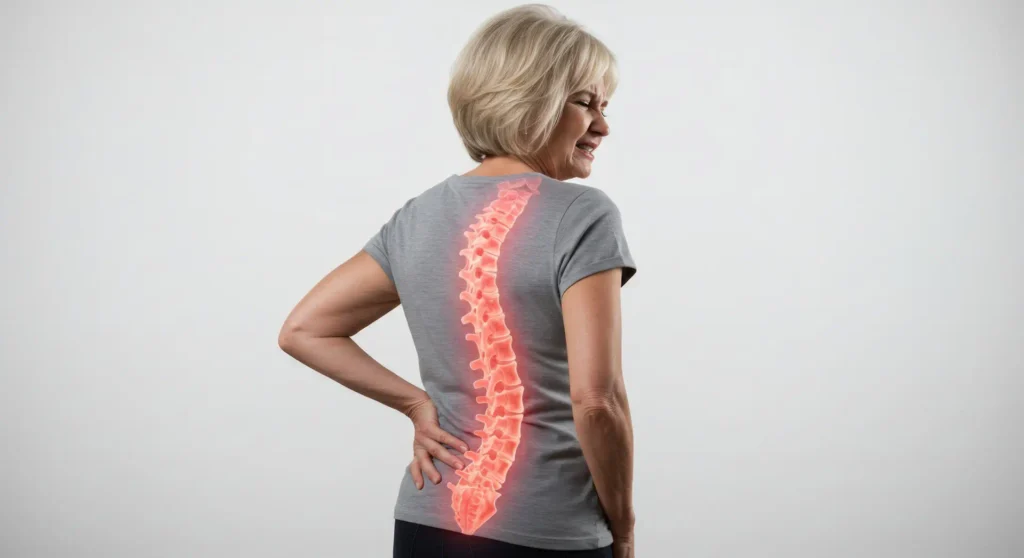
Scoliosis is a condition in which the spine curves sideways, typically forming an “S” or “C” shape instead of remaining vertically aligned. It often begins as a minor shift in the vertebrae that progresses slowly over time, especially if left untreated. A formal diagnosis is made when the spine curves more than ten degrees to either side when a patient is standing straight. Although this curvature may start small, scoliosis can lead to significant health complications if it continues to advance unchecked. Learn more about scoliosis treatment in Olivia, NC or New Hill, NC to explore local care options.
The early stages of scoliosis frequently develop during childhood or adolescence—particularly between ages 10 and 12, when rapid growth spurts place additional strain on the spine. However, scoliosis can also appear in adults due to degenerative changes such as arthritis or long-term postural imbalances. Many adults are surprised to learn that mild scoliosis may have been present since youth and simply worsened with age.
One of the challenges is that its cause can be difficult to pinpoint. Sometimes it begins with a small misalignment in one vertebra, which prompts the surrounding muscles to compensate. As the body tries to keep the head level and maintain balance, additional muscles tighten or weaken, gradually pulling the spine into a more pronounced curve. Over months or years, this compensation pattern can become deeply ingrained, resulting in noticeable asymmetry in the shoulders, hips, and overall posture.
If scoliosis is allowed to progress without intervention, the consequences can become severe. Many patients experience chronic pain in the back, neck, shoulders, and buttocks due to uneven stress on the joints and muscles. The imbalance may also contribute to recurring injuries or conditions such as sciatica. In advanced cases, it can impair lung expansion and heart function, limit physical mobility, and cause significant discomfort or disability. For women, severe scoliosis can even exacerbate painful menstruation.
Early detection is crucial. Parents or close relatives are often the first to notice changes, such as one shoulder appearing higher than the other or clothing fitting unevenly. During a clinical evaluation, a chiropractor will observe gait, posture, and spinal curvature. Tests such as the Adams Forward Bend Test help identify abnormalities, while X-rays confirm the degree and severity.
Fortunately, chiropractic care offers a conservative, non-invasive approach that can help slow, stop, and—in some cases—improve the progression. Through targeted spinal adjustments, muscle balancing, and customized treatment plans, chiropractic care supports better alignment, reduces pain, and helps the body function more efficiently.